How we modernised a critical public-service platform without disrupting access to trusted guidance.
60% faster
response times
50% lower
monthly Azure costs
Future ready
supported platform
Challenge
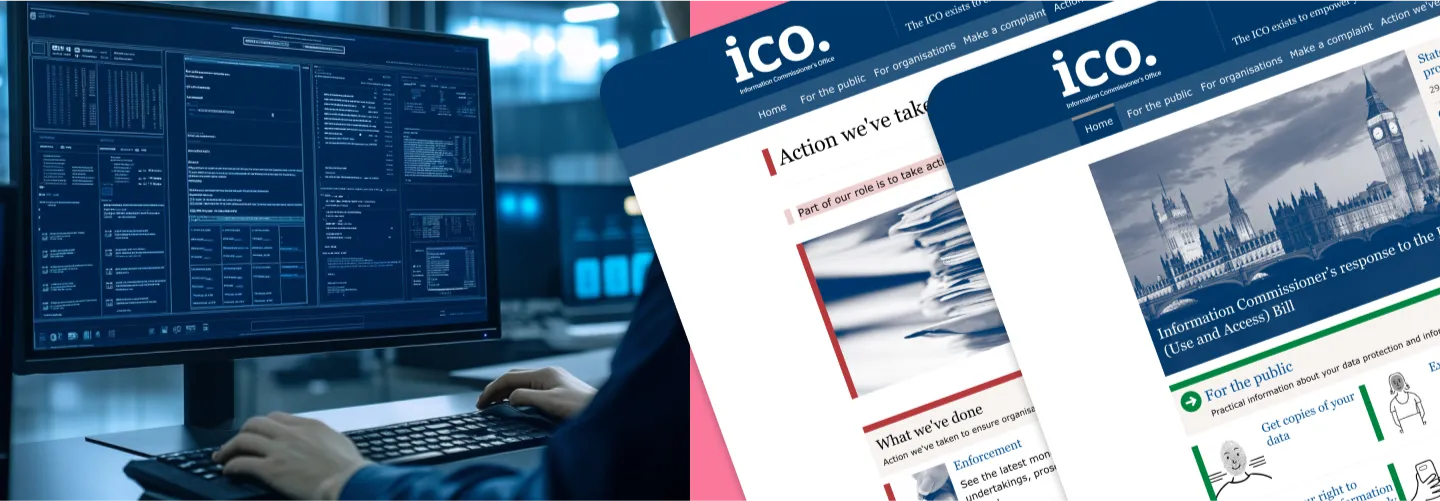
Umbraco 7 reaching end of life presented the ICO with more than a technology decision. The organisation relied on their web platform to underpin nationally important public services, where citizens, businesses and public bodies depend on timely access to trusted guidance. Any disruption carried operational, reputational and public-service risk.
At the same time, the platform had become increasingly difficult to evolve. Years of incremental change had introduced technical debt, operational complexity and infrastructure overhead that slowed delivery and increased the cost of ownership. Simply upgrading the CMS would have addressed the immediate support issue, but it would have preserved many of the constraints limiting future change.
The ICO needed more than a supported version of Umbraco. They needed a platform that would strengthen resilience, reduce operational risk, improve the experience for content teams and create a foundation for the next generation of digital services, and all while keeping a critical public service available throughout the migration.
Approach
Transform the platform, not just the technology
We treated the programme as a strategic platform transformation rather than a software upgrade. That meant looking beyond the CMS to the wider operating model, editorial experience, security and long-term cost of ownership.
Reduce risk through phased delivery
We ran the existing and new platforms in parallel, prioritising the estate into manageable releases. This avoided a single high-risk cutover, protected continuity of service and gave stakeholders confidence as the programme progressed.
Create a stronger operating model
We simplified the platform, strengthened governance and embedded security and quality assurance into everyday delivery. We also gave editorial teams more control, reducing routine reliance on developers and making it easier to publish clear, consistent and accessible content.
Outcome
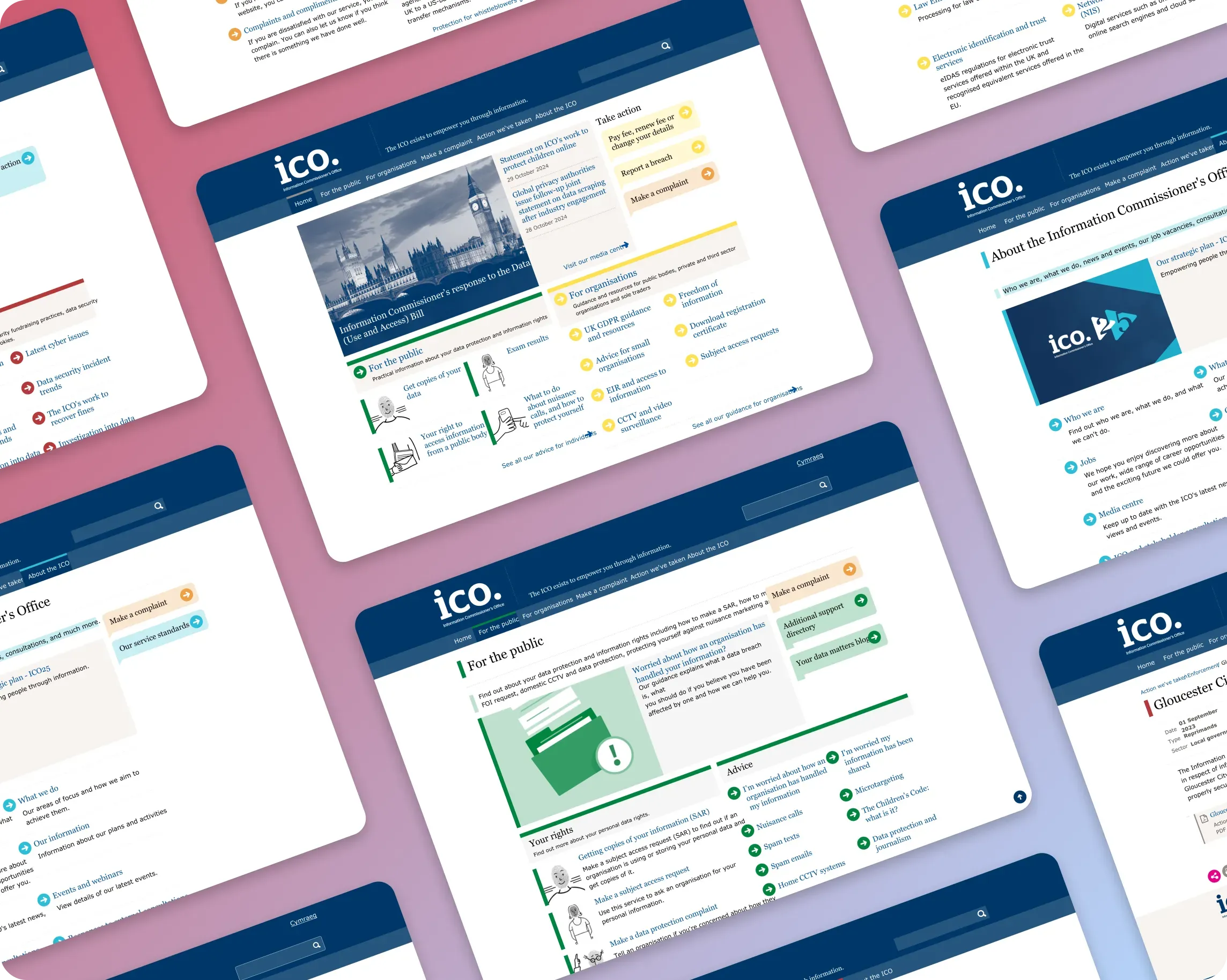
The ICO moved from an ageing, increasingly restrictive platform to a modern digital foundation built for continuous improvement. The service is faster, more resilient and easier to operate, while teams can deliver and publish change with greater confidence.
The programme also reduced monthly Azure costs by around 50%, showing that strategic modernisation can improve service quality while lowering the long-term cost of ownership.
Most importantly, the ICO is no longer constrained by legacy technology. It now has a supported platform, a safer model for change and the flexibility to evolve its digital services as public needs and organisational priorities develop. We did not simply migrate a CMS. We created a stronger foundation for the next generation of public services.
Looking to achieve something similar?
Book a call with our team to discuss how we can help.
Related content
ICO
How we stabilised a strained public-service platform and became a long-term digital partner.

Novuna
Stabilising and evolving a multi-brand financial services platform through long-term partnership

DBT
Adopting and optimising the Payment Practices Reporting service for the Department of Business & Trade.
